MADBOYS
GOLDEN BLOOD
START HERE · LEGENDS

Heroes, the Council, and a Story That Grows With You

You begin as Nick — a decent guy who serves the Fairy and hunts the city’s former masters. A few chapters later you command hundreds of heroes, a secret order in place of a government, industrial monster hunting, the laundering of magical gold, royal spies, and expeditions into places where the map itself breaks. This is not an introduction to “lore” but to the people and forces that will keep pushing the long story of MADBOYS further.

9 min read · 20 key ideas
01

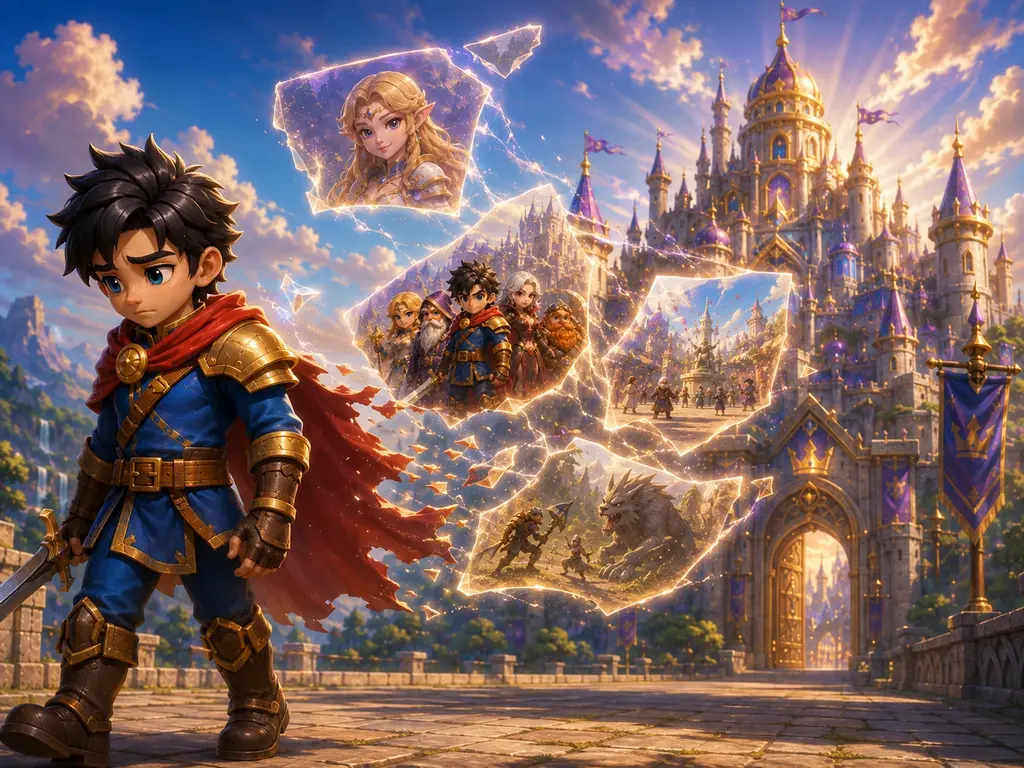
It begins with Nick — a good man already serving a dangerous power

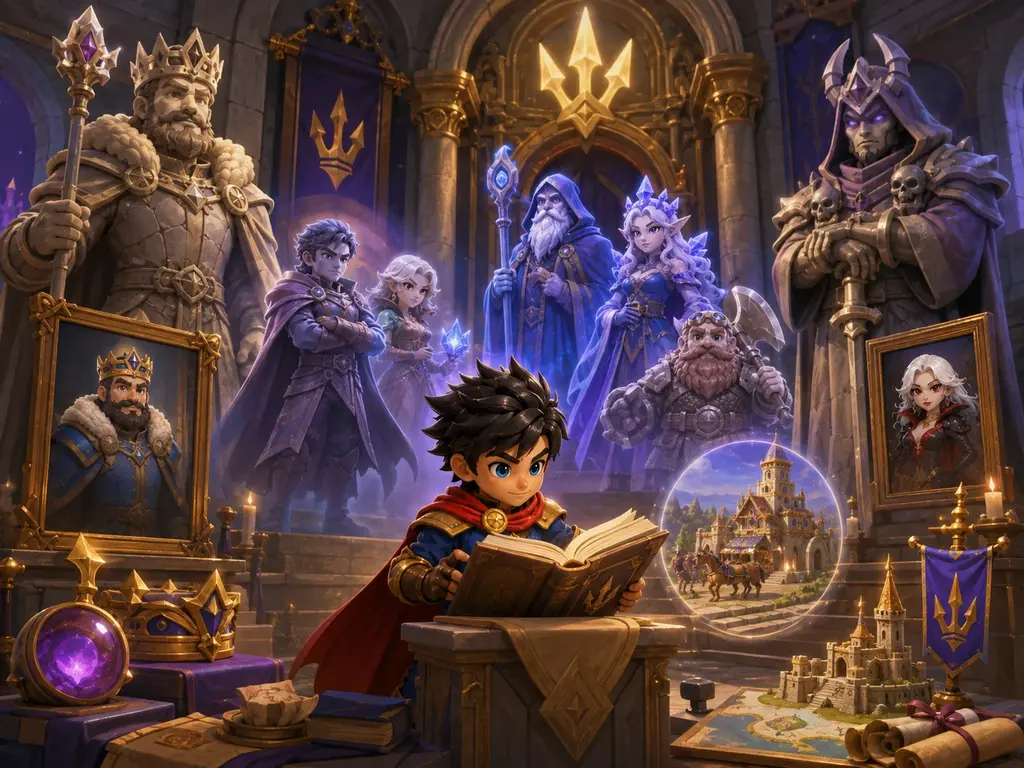
Nick is the first human doorway into the story: a young warrior, polite, kind, and sincerely loyal to the Fairy Queen. He believes she wants to make the world better, dismisses rumors about the Golden Curse, and is ready to carry out her orders. That makes him the right starting point: not a chosen one and not a villain, but a good person inside a system whose meaning he does not yet understand.
Actors of AurelionActors of Aurelion ↗
02

A hero’s first job is hunting the city’s former owners

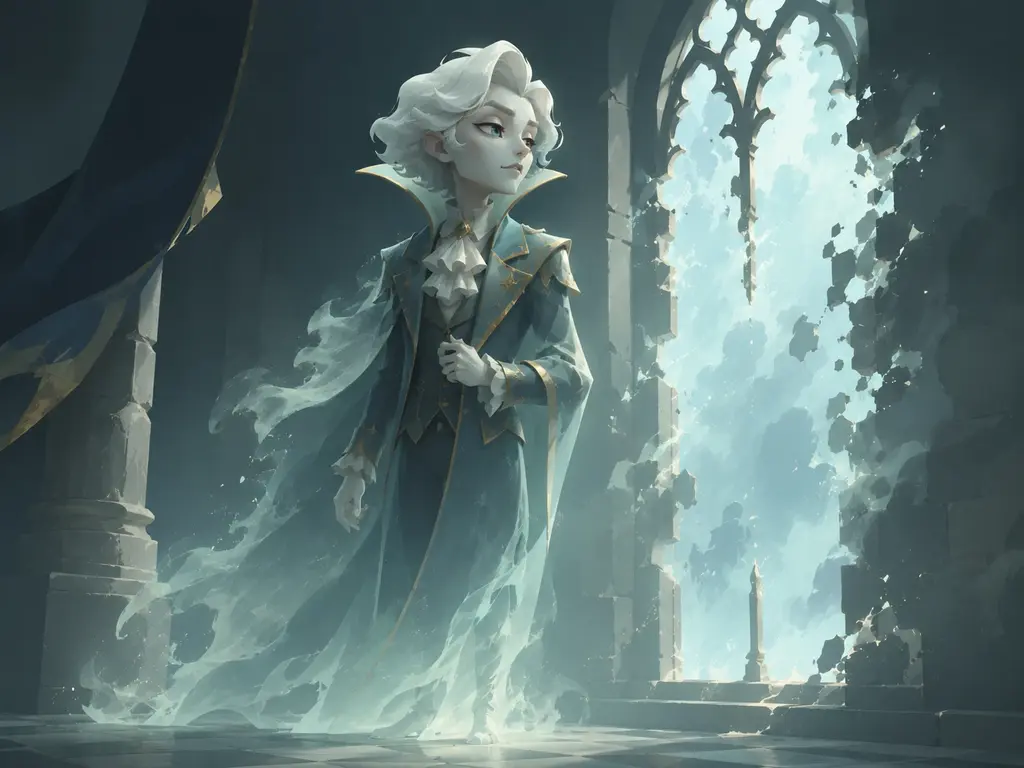
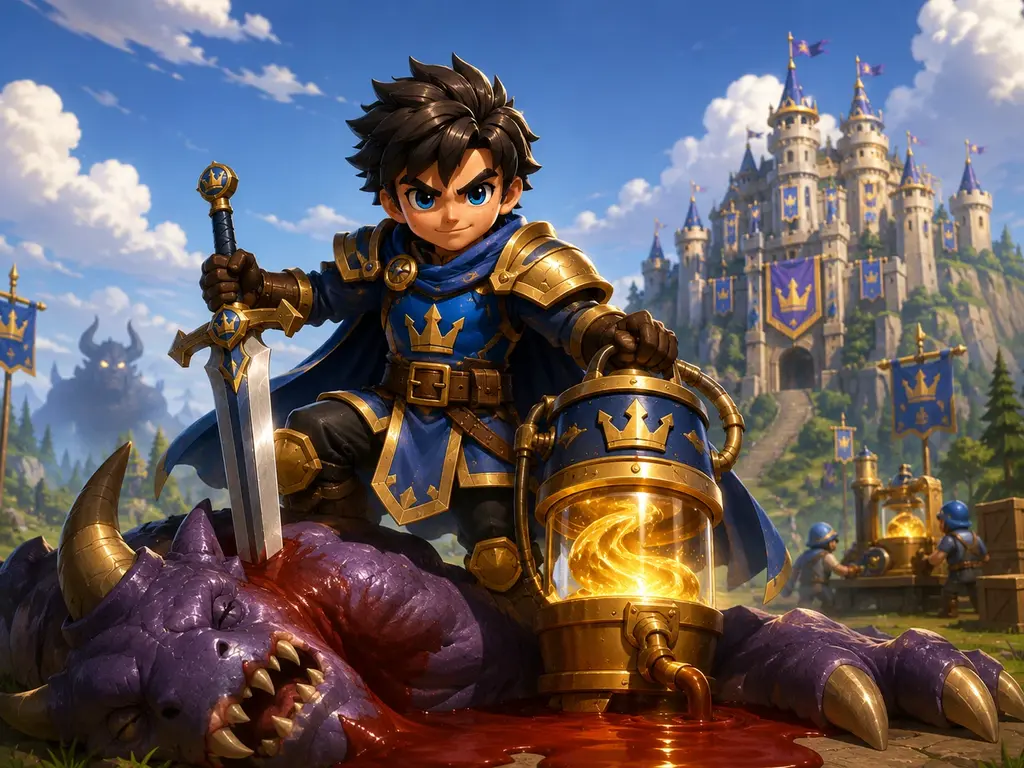
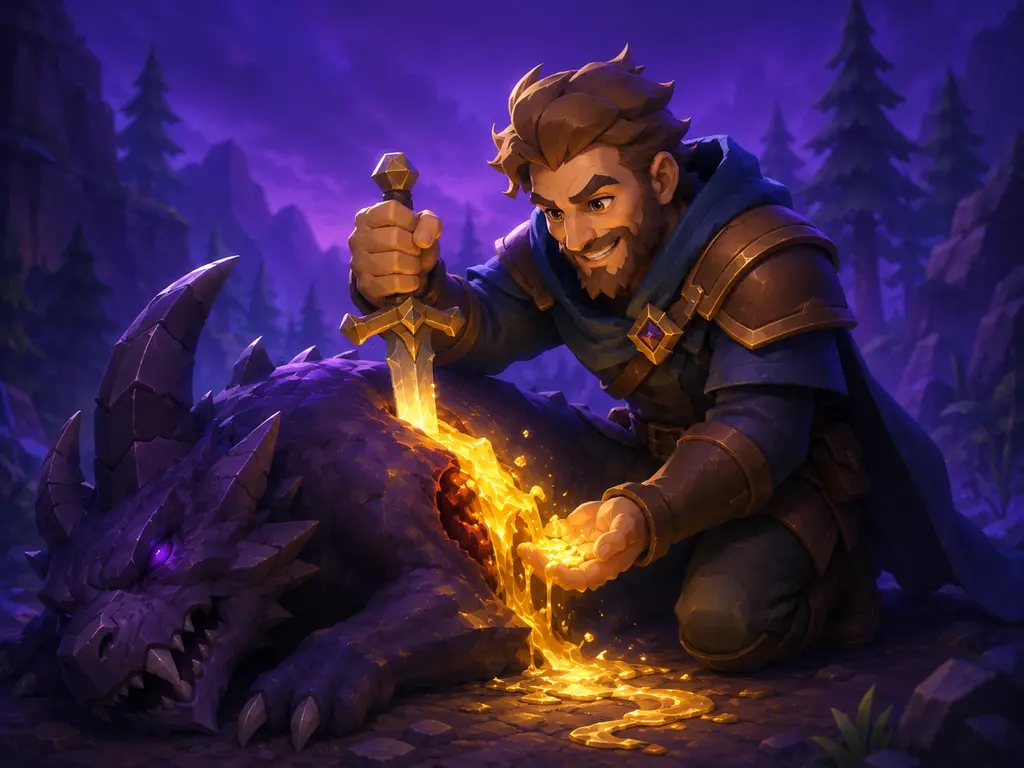
Nick goes after the hatifnafts — deranged Golden Ghosts, remnants of the aristocrats who bought immortality from the Fairy. The monster in the corridor may recently have owned this house, held a title, had a family, and commanded servants. The first dungeons therefore tie adventure directly to political catastrophe: the heroes are literally clearing the city of its former masters.

HatifnaftsHatifnafts ↗
03

Ember is certain he will become a dragon one day

Ember is a Dragon Warrior — honest, stubborn, and convinced that his deeds will one day prove a true draconic inheritance. He questions the Fairy more readily than Nick and gladly argues about what is really happening. Even the first team works like a good serial: friends look at the same danger differently, and power does not automatically make them older or wiser.

DragonsDragons ↗
04

Niel does not want to save the world — she wants a beautiful life

Niel is invisible, talkative, and addicted to gossip; she dreams of dresses, celebrities, and treasures of her own. Against Fairies, Lords, and catastrophes, characters like her keep the story from drowning in solemnity: people can survive the impossible and still get jealous, brag, flirt, quarrel over nonsense, and carry very small desires into very large events.

Daily Life in GildgladeDaily Life in Gildglade ↗
05

Three heroes quickly become a crowd of faces

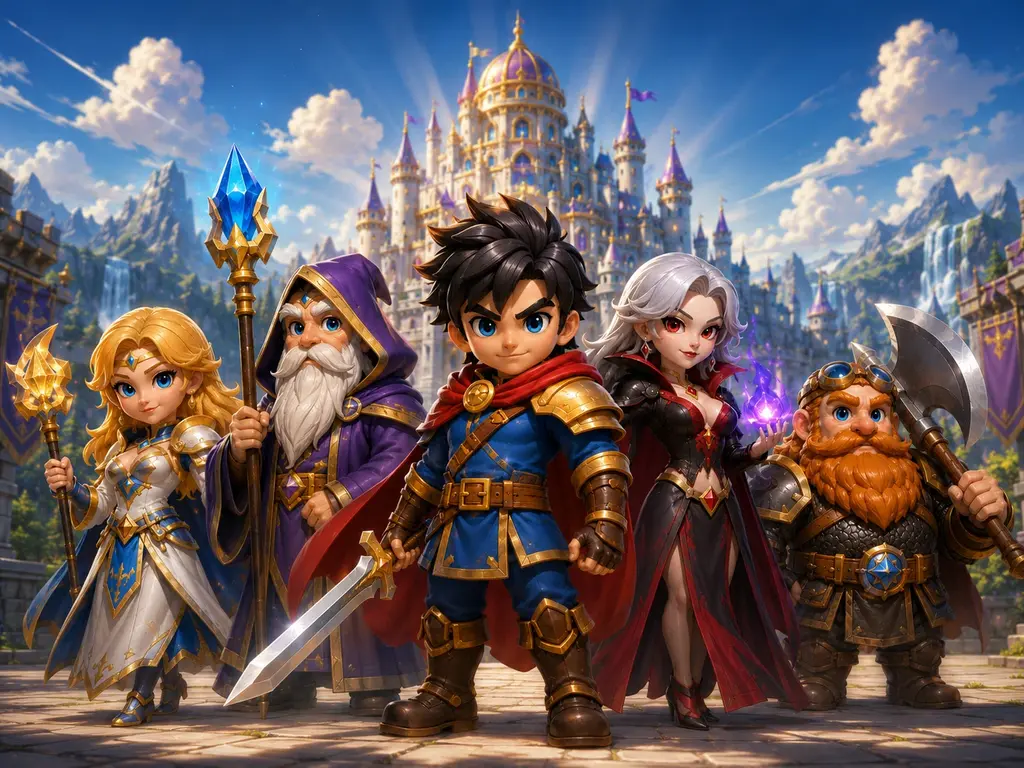
Soon there is Knox, a swindler with counterfeit artifacts; Meow, a witch-cat; Dragnir, a former pirate; and dozens of mages, rangers, assassins, merchants, and strange beings. MADBOYS is not built around one eternal party. Any new hero can enter the story, gain relationships, work, enemies, and a small personal legend — so the scale grows through faces, not statistics.

Mad BoysMad Boys ↗
06

You do not control one hero — you gather hundreds of heroes into one secret system

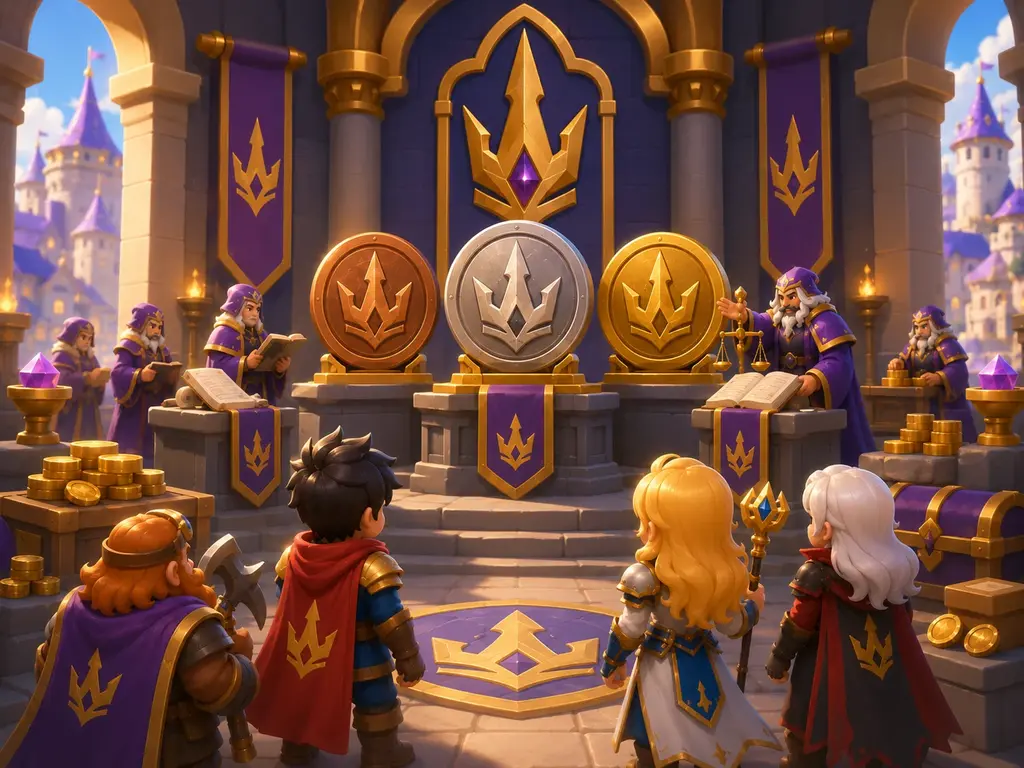
The Council draws in more and more people, assigns them roles, sends them on expeditions, develops the strongest, and ties private lives into its hierarchy. The player manages not one legend but an organization capable of producing hundreds of legends at once. The meta-game is therefore also the story of how private individuals gradually become a vast political force.

Mad BoysMad Boys ↗
07

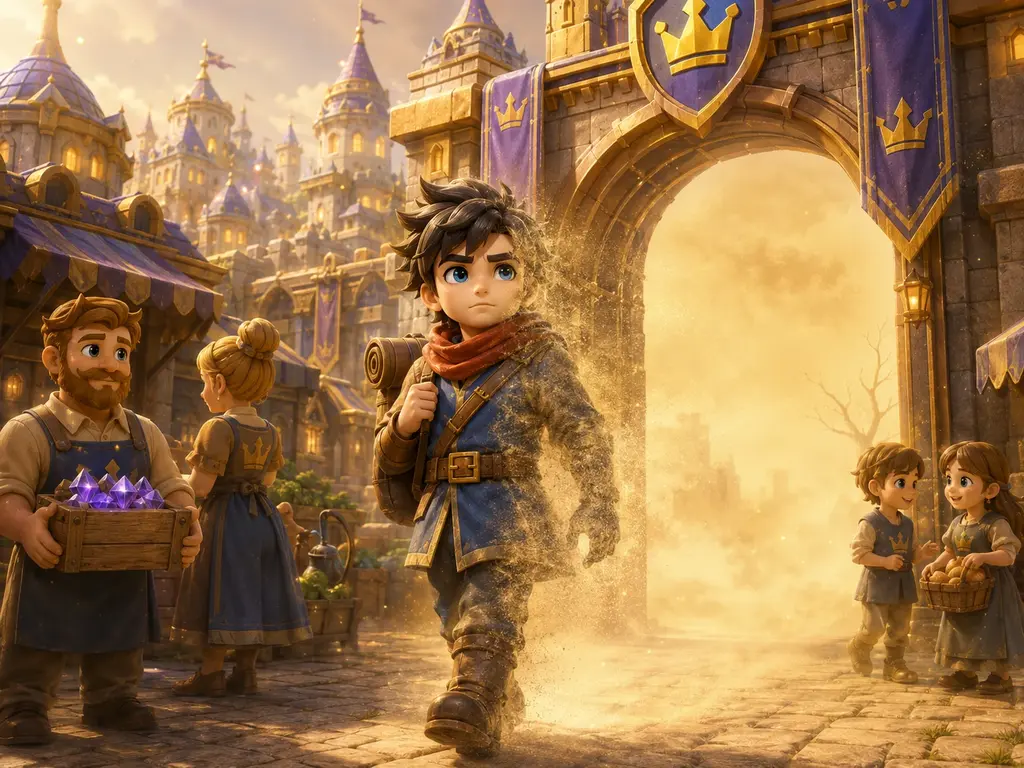
All of this happens in a city where different peoples are forced to live side by side

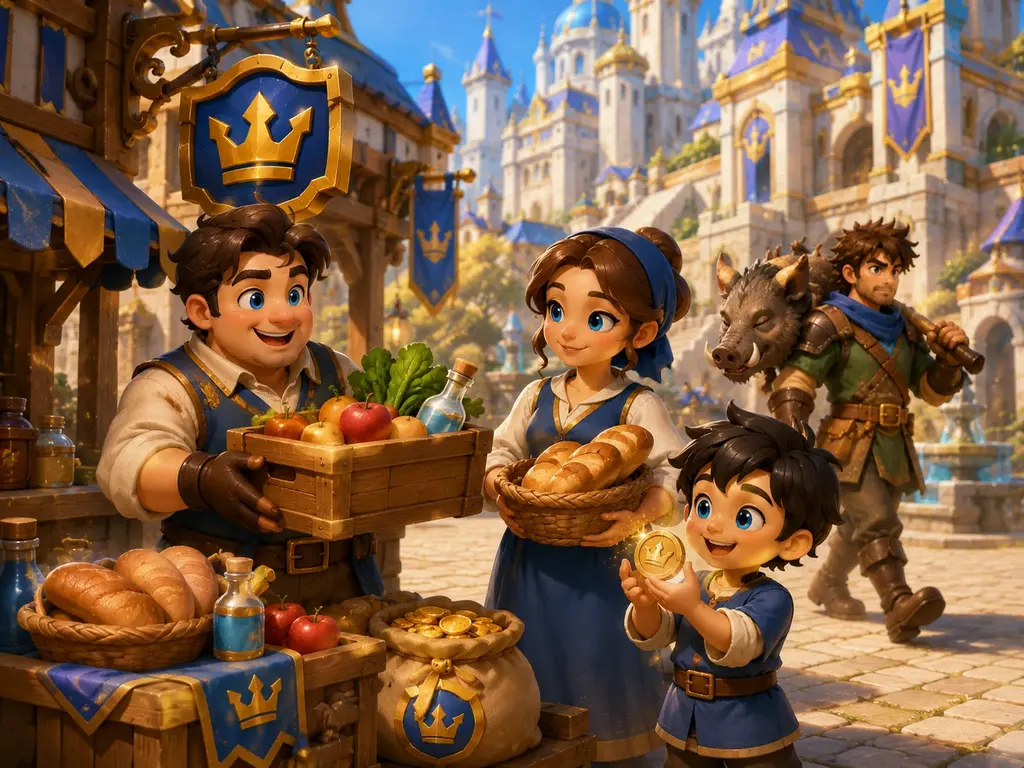
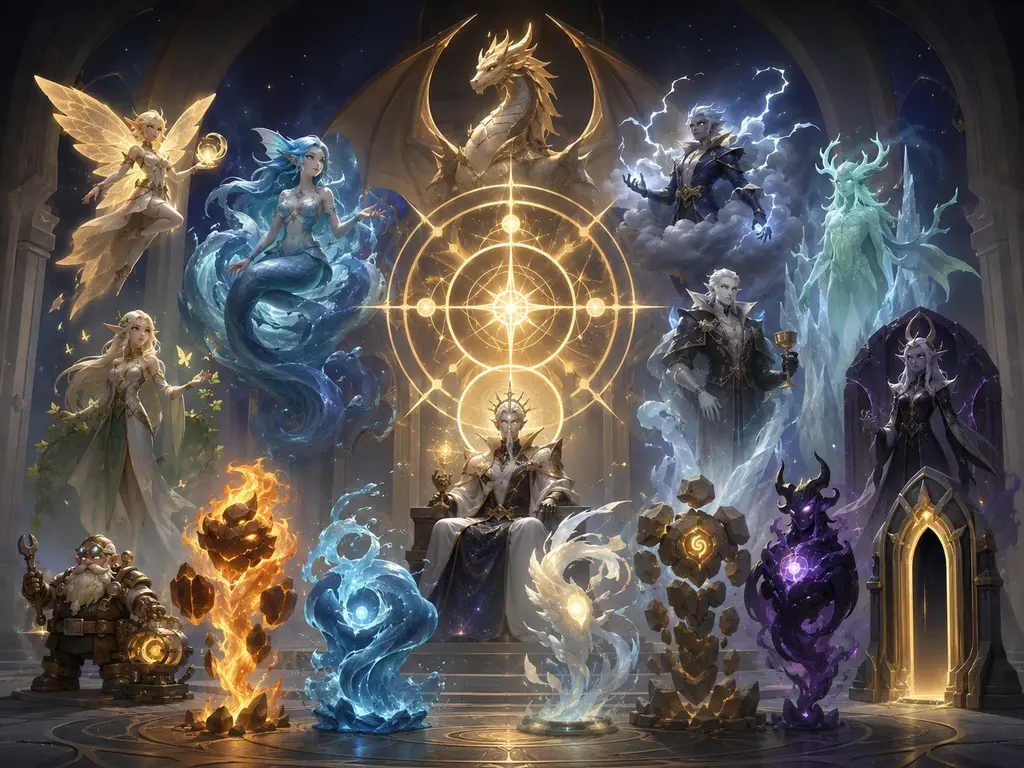
Gildglade is not large, but the gold rush constantly attracts hunters, sailors, mercenaries, traders, and outsiders. Humans, miaurises, Blue Northerners, goblins, orcs, northern drakkars, and visitors from foreign powers end up in the same economic cauldron. A new people is therefore not a new monster set but new heroes, districts, habits, deals, and reasons for conflict.

Peoples of AurelionPeoples of Aurelion ↗
08

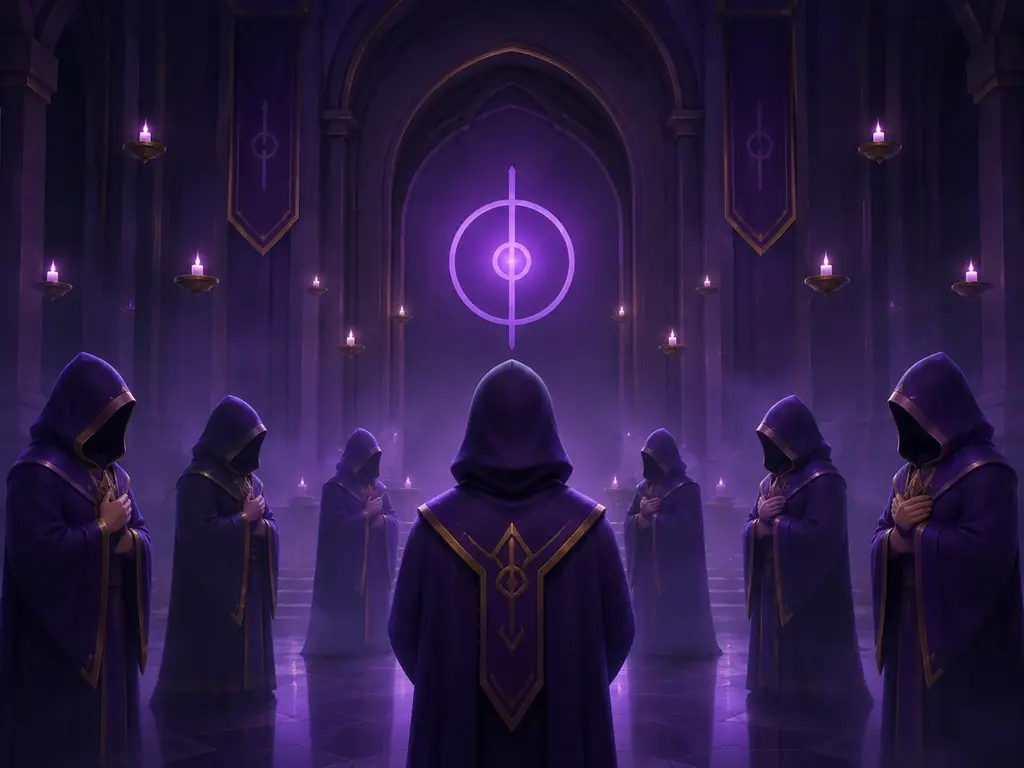
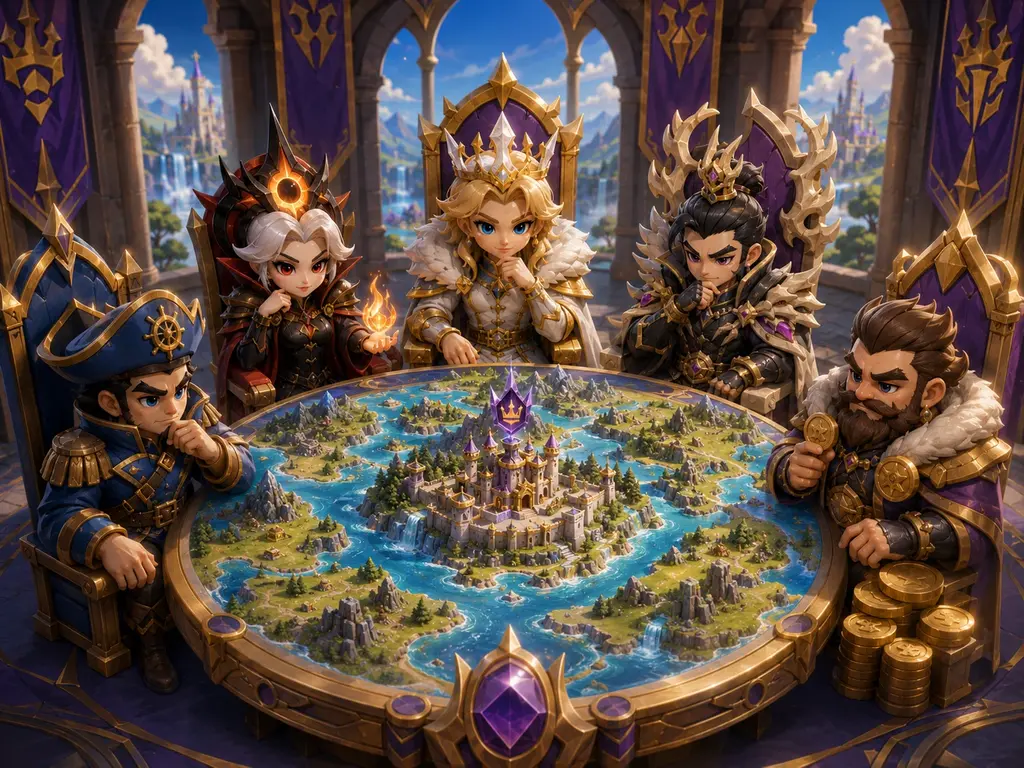
The real main character of the game is the Secret Council

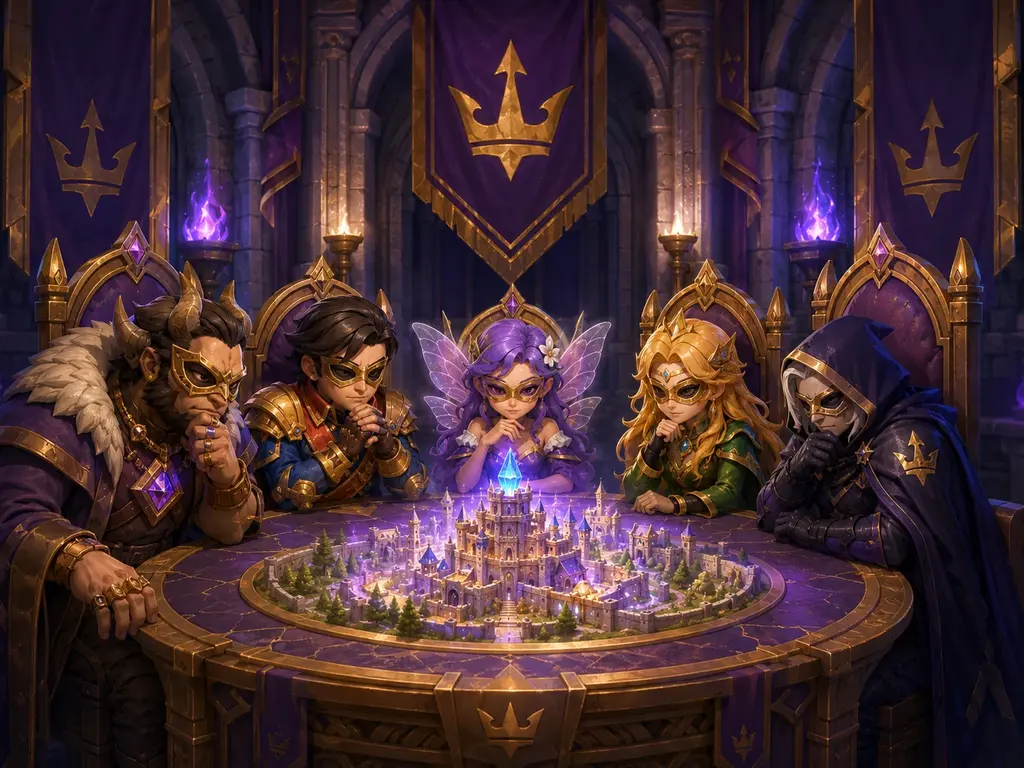
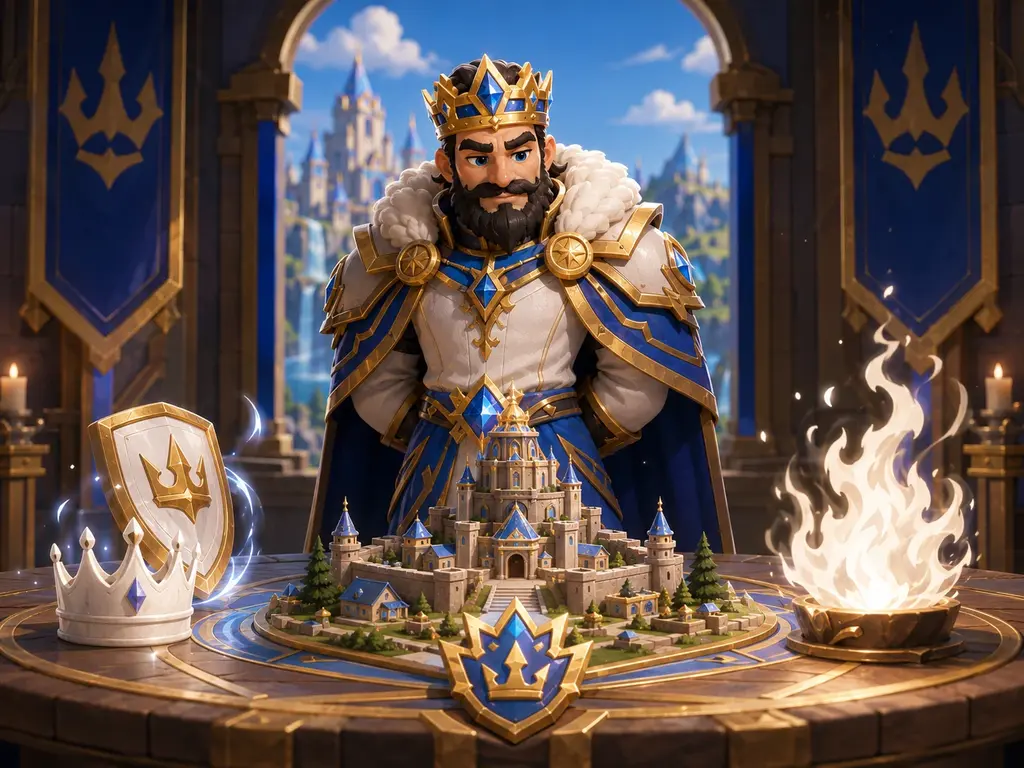
The Council begins as a closed organization of hunters and functionaries, then gradually controls food, the port, guards, dungeons, gold, foreign relations, and the city’s secrets. Formally it is almost illegal; practically Gildglade dies without it. The player does not take a throne — the player helps a secret order occupy the necessary functions of a state without ever declaring itself a state out loud.

The Secret CouncilThe Secret Council ↗
09

This cult-state has Twelve Masks and three peaks

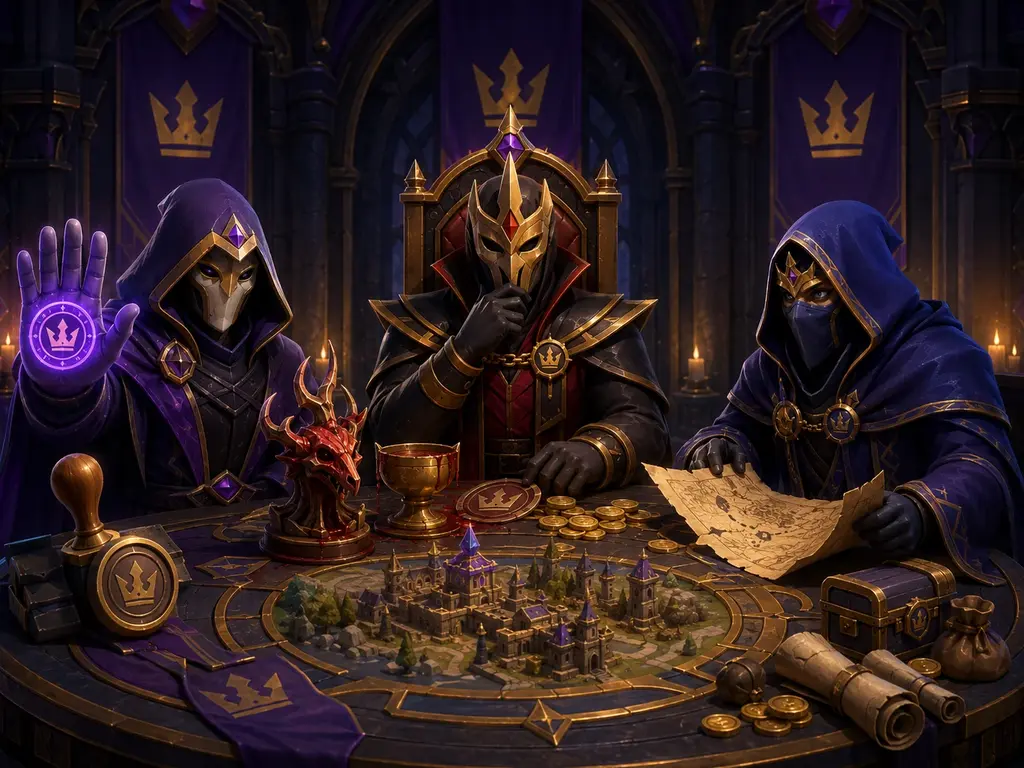
At the top stand the Head of the Council, the Master of the Hunt, and the Secret Adviser. The Fairy speaks through the Head; the Master of the Hunt controls dungeons, licenses, expeditions, and loot; the Secret Adviser handles foreign deals, intelligence, smuggling, and legitimizing wealth. The other Masks hold the city’s vital functions. This is not a cabinet of ministers — it is a conspiracy that learned to govern.

Secret Council OfficesSecret Council Offices ↗
10

The Council chooses the Head, but the Fairy decides whether to answer

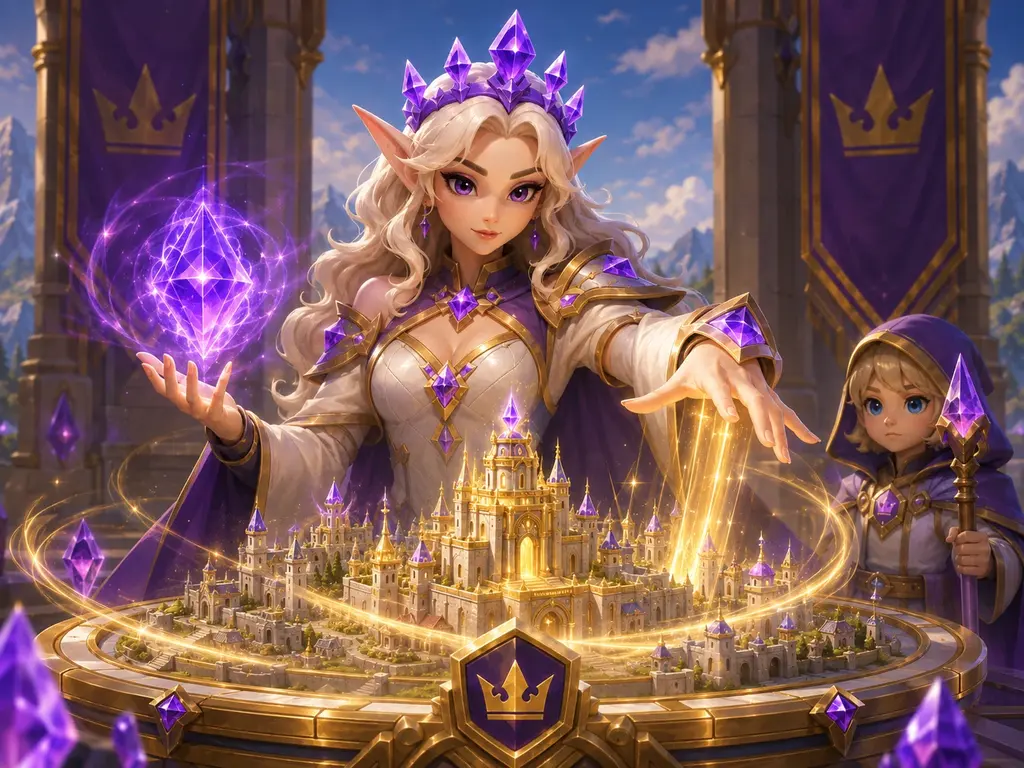
People formally appoint the Head, but the office matters because the Fairy Queen speaks to the city through that person. If she stops answering one Head and begins answering another, politics becomes religion: who is truly appointing whom? The central office of government is also a communication channel to a nonhuman power.

Fairy QueenFairy Queen ↗
11

A real king still stands above the city — Simaly III

For Gildglade, Simaly III becomes an external antagonist, but from his perspective the city legally belongs to the Crown, evades taxes, hides forbidden magic, and is building its own authority. He need not be a mad tyrant; it is enough to decide coldly that an infected northern port is better reclaimed, sterilized, or destroyed than tolerated any longer.

King Simaly IIIKing Simaly III ↗
12

So the Secret Council literally launders magical gold

Golden Blood cannot simply be loaded onto a ship and delivered to the capital. It is mixed with ordinary metal, routed through foreign merchants, turned into collateral, and moved through the Republic of Three Coins and northern routes. The Secret Adviser turns the resource’s origin into documents, stories, insurance, and plausible lies — fantasy money laundering becomes part of the larger plot.

Republic of Three CoinsRepublic of Three Coins ↗
13

Royal officials call it an investigation. The Council calls it espionage

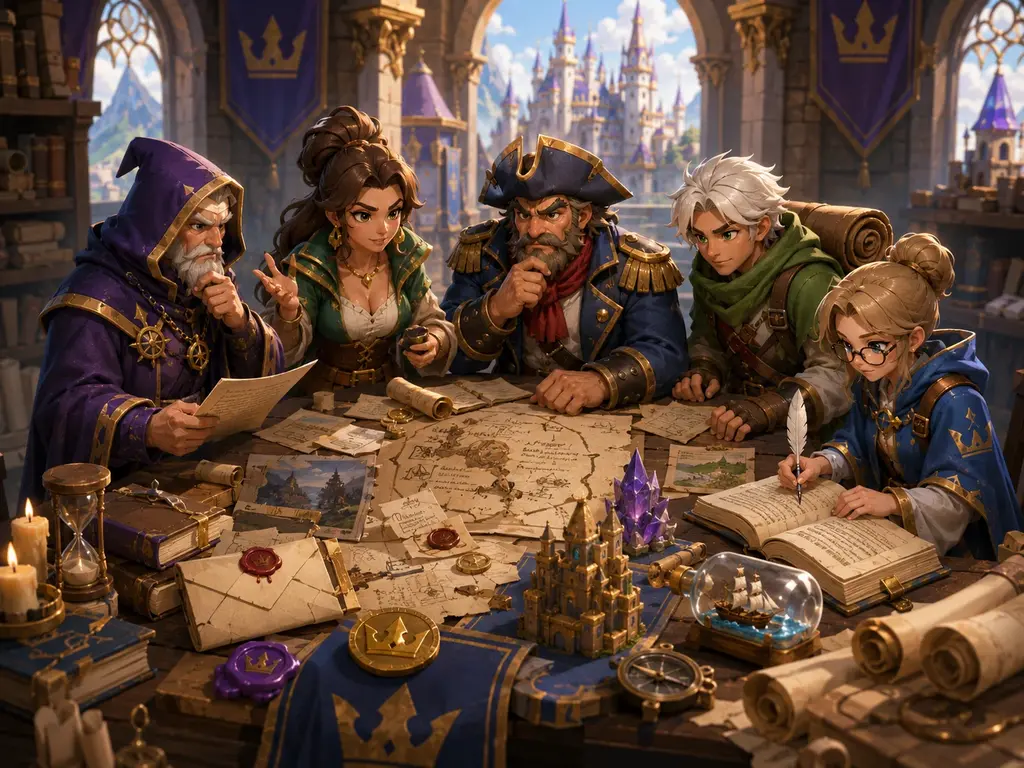
An inspector checks taxes — the Council sees an attempt to uncover the secret of Golden Blood. An inquisitor hunts heresy — the city prepares for possible sterilization. Some conflicts are therefore solved not by swords but by counterintelligence: find the agent, hide the route, replace documents, buy a witness, and decide how much truth the outside world can be allowed to see.

Interstate RelationsInterstate Relations ↗
14

While diplomats lie, the Master of the Hunt turns dungeons into industry

The right to enter a dungeon, lead a major expedition, claim a rare relic, or receive a share of a carcass is political power. The Master of the Hunt simultaneously controls military force, the city’s chief source of income, and the careers of hundreds of heroes. A new character in your collection is therefore not just a combat unit but an entrant into a system of licenses, reputation, loot, ranks, and obligations.

The Monster HuntThe Monster Hunt ↗
15

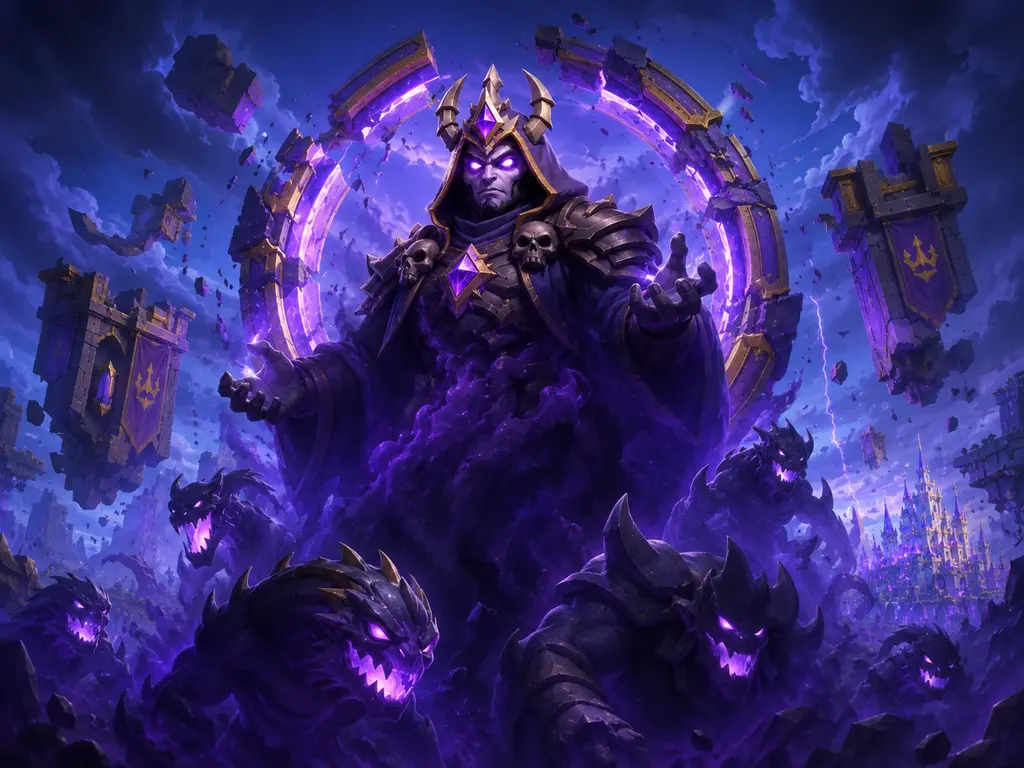
The Dark Lord is not the final villain, but the first hint that someone else is playing

He unites monsters and disrupts the Golden Hunt, so at first everything seems simple: city, hunt, enemy. Then it becomes clear that even a huge boss may be only an agent, a trophy, or a piece in the hierarchy of powers far above him. The story does not grow from “weak boss to strong boss” but from a clear enemy to the question of who is hunting whom.

Dark LordDark Lord ↗
16

Chapter 1 begins personally: Abigail, the statue, the ritual, and the first Golden Blood

The first chapter does not explain all of Aurelion. The Council solves a concrete problem, Nick and the heroes face hatifnafts and gather protective elements; after the visible victory, Abigail does not awaken, and golden light ties a personal tragedy to something ancient. The story’s rule appears immediately: you win — and the victory itself opens the next layer.

Golden BloodGolden Blood ↗
17

Chapter 2 turns a group of heroes into political power

Seals, a convoy, a riot, and the Golden Sphere force the Council not merely to defend the city but to seize authority because otherwise everything stops working. Old offices, the Golden Statute, and a bargain with the Fairy literally assemble legitimacy from seals, rituals, and promises. The secret organization can no longer pretend that it is only helping the city’s true owners.

The Fourth SeatThe Fourth Seat ↗
18

Chapter 3 breaks the game’s central comfort: beyond the river, the map stops being a map

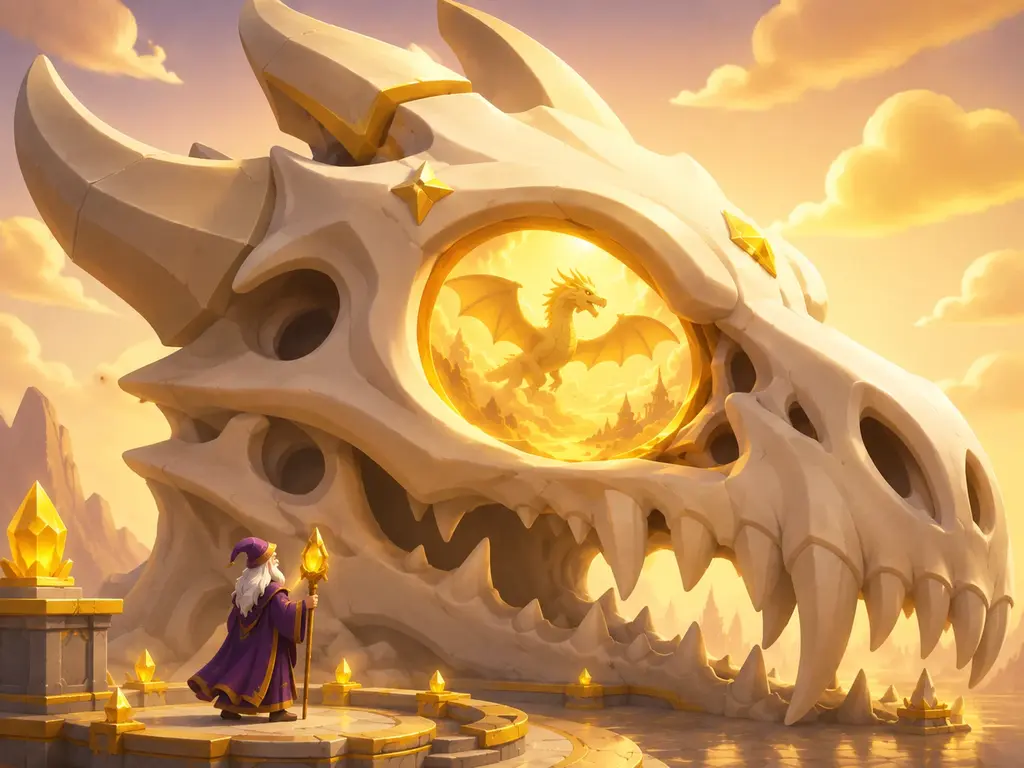
Expansion seems natural — the city needs resources and new territory. But the fortress, bones, unstable Node, and anomalies change what travel means: the heroes discover that they have not merely left the city, but left the familiar version of reality. A new region becomes not a new biome but a new law of the world, able to alter memory, causality, and the road home.

Forgetting Beyond the WallsForgetting Beyond the Walls ↗
19

Expansion brings new peoples — and new rules of life — into the story

After Chapter 3, Gildglade stops being a closed stage. New lands bring tribes, religions, trade routes, and states into the plot, and yesterday’s exotic NPC can become an ally, a hero, a mass faction, or the cause of a war. The scale grows like a long-running anime: familiar faces remain while new layers of the world keep accumulating above them.

External Powers of AurelionExternal Powers of Aurelion ↗
20

Chapters IV–VI promise what games once had to simplify

Beyond this point the principle matters more than spoilers: the city must remember the consequences of victories; hundreds of heroes must keep living with their own goals and relationships; outside powers must react to the growing Council; and new territories must change system rules, not merely scenery. Modern AI gives a green light to tasks that were once too expensive to maintain by hand — long world memory, a living hierarchy of characters, and conflicts whose consequences accumulate over dozens of chapters.

The City RemembersThe City Remembers ↗

Continue exploring

All 161 Canon, Legends and Chronicle articles remain available in the full index.

Open all articles ↗